

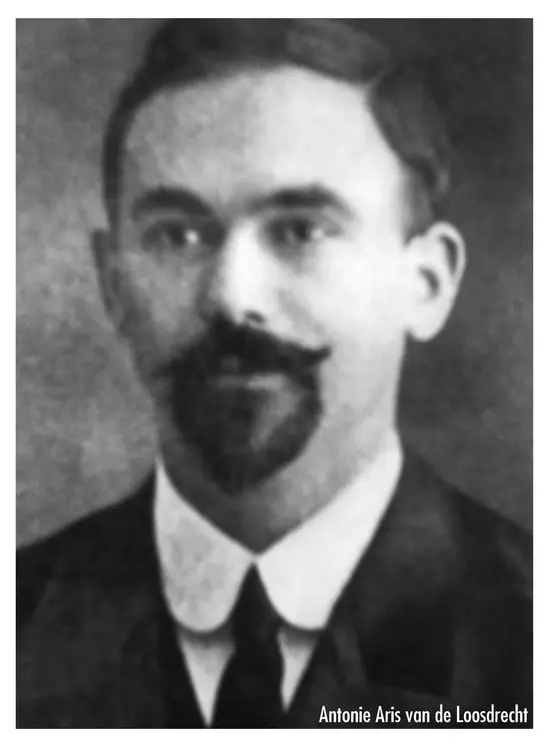
Antonie Aris van de Loosdrecht
The history of the beginnings of evangelism in Toraja. From the smallest seed, it grew into a tree.
Antonie Aris van de Loosdrecht (March 21, 1885 – July 26, 1917) was the first missionary or Zendeling (Zendeling) to arrive in Tana Toraja, Sulawesi, Dutch East Indies. Antonie Aris van de Loosdrecht worked as a missionary in Tana Toraja, Sulawesi, Dutch East Indies, on behalf of the Gereformed Evangelical Missionary Association, an evangelistic organization founded in Utrecht, Netherlands, on February 6, 1901. Young Antonie Aris van de Loosdrecht volunteered as a missionary ready to evangelize Tana Toraja after reading the Gereformed Evangelical Missionary Association's magazine, Alle den Volcke. Alle den Volcke contained various information about the Gereformed Evangelical Missionary Association, including updates on its fieldwork. The Alle den Volcke magazine, which Antonie Aris van de Loosdrecht read, also contained information that the Gereformeerd Evangelical Mission Association was looking for evangelists or missionaries.
Early Life and Education.
Antonie Aris van de Loosdrecht was born on March 21, 1885, in the small town of Veenendaal, Netherlands, a town then known for its wool weaving and cigarette factories. His surname, "Van de Loosdrecht," did not actually come from his biological father. It was given to him by his stepfather, a wool mill worker who married his mother.
Antonie Aris van de Loosdrecht studied at the Faculty of Theology at Heidelberg University, and for this reason, Antonie Aris van de Loosdrecht and his wife took the time to visit Heidelberg on their way from the Netherlands to Genoa, Italy, even though it was off their itinerary. Antonie Aris van de Loosdrecht also completed his studies at the Rotterdam Missionary School.
Antonie Aris van de Loosdrecht married Alida Petronella Sizoo or later known as Ida van de Loosdrecht on August 7, 1913. They met at a public lecture given by a graduate of the Missionary School in Rotterdam.
Work in Tana Toraja
Demand for the establishment of schools was increasing, a fact supported by several facts, such as a letter sent by Antonie Aris van de Loosdrecht's wife, Ida van de Loosdrecht, to A. C. Kruyt's wife, J. Moulijn. The letter, dated May 25, 1914, contains Ida van de Loosdrecht's first impressions of Tana Toraja. In the letter, she also recounts her husband's travels to various locations in Tana Toraja, sometimes for days, due to the numerous requests to build schools. Therefore, Ida van de Loosdrecht hoped that the Reformed Evangelical Mission Association would send more missionaries to Tana Toraja.
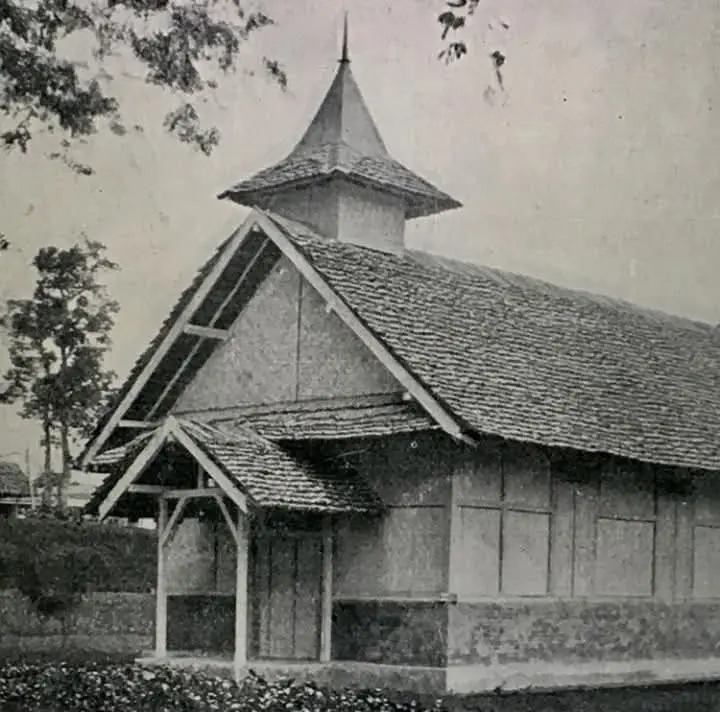
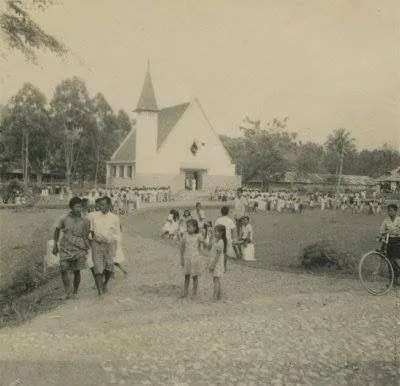
Photo by Ringel Goslinga, 1935
Letters of Antonie Aris Van de Loosdrecht
in January 1914, Antonie Aris Van de Loosdrecht wrote to the administrators of the Gereformeerd Missionary Society. The letter was published in the magazine of the Evangelical Gereformeerd Society, Alle den Volcke, in 1914 through the letter, Antonie Aris Van de Loosdrecht wrote her views on the relationship between the government and the Zending or the body of the gospel.He began his writing by telling the tribal religion practiced by the people in Tana Toraja. He argued that the religion of the tribe was trying to be eradicated by the government to the very roots, including its rituals. In many cases, the present government only gave instructions and did not open a discussion room with the ancestors of the Toraja people. Even in some cases, there were Courts for some people who were considered witches. In addition, the government also initiated the abolition of the slave system, which in Toraja society was part of their living system. Antonie Aris Van de Loosdrecht criticized the government's actions because they were considered instant. Antonie Aris Van de Loosdrecht at that time preferred to do missionary work through the schools he founded.Antonie Aris van de Loosdrecht's other letter, also published in the magazine Alle den Volcke, tells of the method of preaching he used. First of all, he invited the Toraja traditional leaders to talk in a relaxed atmosphere while smoking a cigarette. The conversation starts from the Daily circumstances of the inhabitants until Antonie Aris van de Loosdrecht slips little by little the stories that exist in the Bible, such as the story of Adam and Eve in the Garden of Eden. Through these stories, Antonie Aris van de Loosdrecht asserts that by nature the ancestors of all people are the same, and therefore everyone should worship the same God. These stories then attracted the attention of the Torajans.In the next period, Antonie Aris van de Loosdrecht also launched its activities by making the market as one of the targets of evangelism. Toraja people at that time attended the traditional market on certain days and the number of people attending reached thousands. To attract their attention, Antonie Aris van de Loosdrecht mobilized pupils studying at the Zending school. After finishing school, the students are invited to the market, they are arranged into two rows and then walk to the market while singing.At that time, the Torajans also had the habit of fighting Buffaloes, so that thousands of people who attended the market focused their attention on the Buffalo fight. To counter this, Antonie Aris van de Loosdrecht once again used her muri-students to seek attention. The students are arranged in such a way in a variety of games that can be entertainment for adults. After the game was over, Antonie Aris van de Loosdrecht began to invite people watching to come closer to her. At the beginning of this effort, Antonie Aris van de Loosdrecht managed to gather about five hundred people to listen to his sermons and most of them were women.
End of life
On July 26, 1917, Antonie Aris van de Loosdrecht had plans to go to Nanggala, one of the areas in Tana Toraja, but suddenly he changed his plans and decided to see the construction of a school in Bori', one of the villages in Tana Toraja. When Antonie Aris van de Loosdrecht was talking to one of the teachers in Bori', a group of people suddenly appeared in front of the teacher's House and shot him. Several people in the group were arrested, including Bujang, Ne'malandong, Tandi Bua and Pong Masangka.Antonie Aris van de Loosdrecht lasted less than 15 minutes and in her last moments, she asked to be left alone to pray, until she fell asleep once and for all. Antonie Aris van de Loosdrecht later became known as the first gospel martyr in Tana Toraja. On Saturday, 28 July 1917, a large funeral cortege was seen in Rantepao, delivering the body of Antonie Aris van de Loosdrecht for burial in the Torajan cemetery. Antonie Aris van de Loosdrecht is survived by his wife Ida van de Loosdrecht and their two young children, as well as one unborn child.
Contribution
One of Antonie Aris van de Loosdrecht's greatest contributions to the lives of the Torajan people is his pioneering work in the world of education for Real Torajans through the construction of Zending schools. In addition, Antonie Aris van de Loosdrecht also became the first to provide reading materials for students in the Toraja language. “Iate Soera 'Dinii Melada' Mbasa Soera '" is the first book created by Antonie Aris van de Loosdrecht as a reading material for students. The book in Toraja language with the title “Boenga 'Lalan, Soera’ Pembasan" is another work of Antonie Aris van de Loosdrecht.Antonie Aris van de Loosdrecht's fairly short work in Tana Toraja (three years) was a precursor to a larger outcome in the future, namely the establishment of a tribal church, the Toraja Church.
Reference
A. Sarira. 1975. The seed that grows 6-Toraja Church. Jakarta: LPS DGI and BPS Toraja Church. Anthonia A. van de Loodrecht. 2005. From The Smallest Seed, It Grows Into A Tree. Jakarta: BPS Toraja Church. W. Bieshaar. 1926. 1901-1925 De Gereformeerde zendingsbond na 25-jaren. The Hague: Gedukt ter drukkerij van s. s korthuis. Terence W. Bigalke. 2005. Tana Toraja: a Social History of an Indonesian People. Singapore. Isaiah Todingbua' Manampa'. 1983. Gospel and culture.Jakarta. Th. van den End. 1994. Zending's sources on the history of the Toraja Church 1901-1961. Jakarta: BPK Gunung Mulia.Article source : https://id.wikipedia.or
